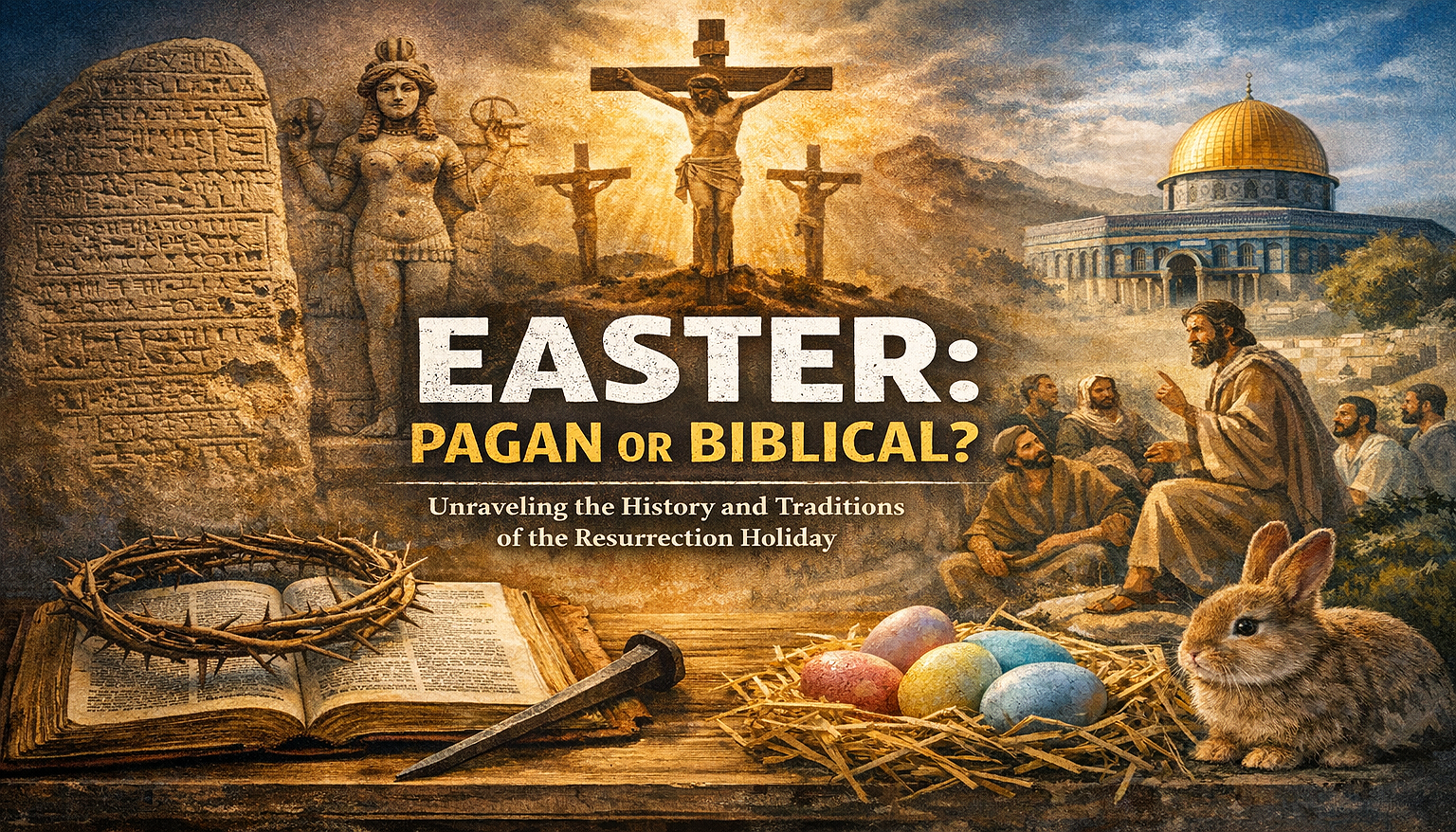
Many people online claim that Easter comes from the pagan goddess Ishtar (or sometimes Isis), suggesting the holiday has roots in ancient fertility or sex worship. However, there is no solid historical evidence—no ancient tablets, inscriptions, or texts—linking the Christian celebration of Easter to Ishtar or Isis. The similarity in the words "Easter" and "Ishtar" is just a coincidence.
Linguistic Reality
The English word "Easter" comes from the Old English Ēastre / Ēostre, mentioned by the 8th-century monk Bede. Most other languages use names derived from Pascha, which comes from the Hebrew Pesach (Passover). For example, Spanish uses Pascua, Greek Pascha, and Latin Pascha. These languages show a direct link to the biblical Passover, not any pagan deity.
Where Confusion Comes From
Internet memes and speculative writings have linked Easter to Ishtar or Isis, often pointing to Easter eggs and rabbits as “fertility symbols.” While eggs and rabbits were later cultural additions, the core origin of Easter is not pagan.
2. Is Easter Mentioned in the Bible?
The Biblical Text
The Bible does not command Christians to celebrate Easter. The word “Easter” appears once in the King James Version (Acts 12:4), but the original Greek word is Pascha, which actually means Passover. Modern translations correctly render it as Passover, not Easter.
What Is Biblical
The events Easter celebrates are entirely biblical: the crucifixion, burial, and resurrection of Jesus Christ. These are described in all four Gospels—Matthew, Mark, Luke, and John. What is not biblical is the instruction to celebrate a specific holiday called “Easter.”
Church Tradition
Easter as a formal holiday was established by the early Christian church, long after the time of the apostles. By the 2nd–4th centuries, Christians set aside a specific day to celebrate the resurrection. The date was standardized at the Council of Nicaea (AD 325). This practice came through the church tradition, including what later became the Catholic Church.
What Early Christians Actually Did
Before Easter became formalized, early Christians remembered Jesus’ resurrection in various ways:
- Weekly gatherings: They met on the first day of the week (Sunday) to hear teachings and break bread, in direct remembrance of Jesus’ resurrection.
- Passover connection: Many early Christians linked the resurrection to the Jewish Passover but did not have a separate holiday called Easter.
- Focus on the Lord’s Supper: The emphasis was on following Jesus’ command to “Do this in remembrance of me” rather than celebrating a yearly holiday.
It wasn’t until decades later that the church formalized an annual celebration, combining biblical remembrance with some local cultural practices, like springtime symbols.
3. Holy Week Traditions: Good Friday and Holy Saturday
Good Friday
Good Friday commemorates Jesus’ crucifixion. While the Bible describes the event in detail, there is no command to observe it as a special day. The church began marking it centuries later. Traditions like fasting or abstaining from meat developed as spiritual practices to honor Jesus’ sacrifice. The “no meat” rule specifically comes from later Catholic discipline, emphasizing penance and reflection.
Holy Saturday
Holy Saturday is the day between Jesus’ death and resurrection. Early Christians often spent this day in prayer and reflection, remembering the burial and waiting for the resurrection. It’s a quiet observance and set the stage for the celebration of Easter Sunday.
4. Easter Sunday
Celebrating the Resurrection
Easter Sunday celebrates Jesus’ resurrection, the central event of Christianity. Early Christians already met on Sundays to honor the resurrection weekly, and the annual Easter observance formalized this practice. Many customs, like sunrise services and festive meals, grew over centuries. The main focus, however, remains remembering that Jesus conquered death.
5. Bottom Line
Easter is not commanded in the Bible, and claims linking it to Ishtar or Isis are not supported by historical evidence. The holiday is a church-established tradition that celebrates a biblical event—the resurrection of Jesus Christ. Good Friday, Holy Saturday, and Easter Sunday developed over time, incorporating biblical remembrance with cultural practices like fasting, abstaining from meat, and festive symbols. The heart of Easter is always the resurrection, which early Christians have been remembering for nearly two millennia.

 D34
D34 
Comments