By this point, we have examined the claimed genealogical path from King David to modern royalty. In this final section, we explore the belief systems that promote and defend these ideas, including British-Israelism and prophetic interpretations that connect the British monarchy to biblical destiny.
2. What Is British-Israelism?
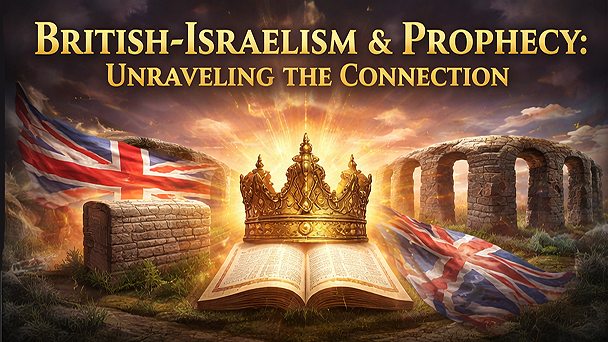
British-Israelism is a theory that emerged in the 19th century, claiming that the people of Britain—and by extension other Western nations—are the direct descendants of the ancient Israelites. According to this belief, the so-called “lost tribes of Israel” migrated into Europe and eventually formed the foundation of modern Western civilizations.
Within this framework, the British royal family is believed to carry the royal bloodline of King David, making the monarchy not just a political institution, but a continuation of a biblical dynasty.
3. The Throne of David Theory
One of the central ideas in these teachings is that the throne of King David never disappeared but was instead transferred. Some proponents claim that after the fall of Jerusalem, a descendant of David traveled to regions such as Ireland or Scotland, bringing the royal line with them.
From there, the theory suggests that this line continued through early European kings and eventually became part of the British monarchy, meaning that today’s royal family sits on what is symbolically considered the “Throne of David.”
4. The Stone of Destiny Connection
Another element often brought into this discussion is the Stone of Destiny, also known as the Stone of Scone. This stone has been used in the coronation of Scottish and later British monarchs for centuries.
Some traditions claim that this stone is the same one mentioned in the Bible, associated with the patriarch Jacob. According to these beliefs, its presence in British coronation ceremonies is seen as further evidence of a biblical connection.
5. Prophetic Interpretations and End-Time Beliefs
Certain interpretations of biblical prophecy suggest that the line of David must continue until the end times. For those who believe the British monarchy carries this line, it places modern royals into a prophetic framework.
In this view, figures like Prince William are not just historical descendants but may play symbolic or even literal roles in future prophetic events. These interpretations vary widely and are often debated among different religious groups.
6. Mainstream Historical and Scholarly View
Mainstream historians and scholars generally reject the claims made by British-Israelism and related theories. They point out that there is no solid archaeological, genetic, or historical evidence linking ancient Israelites directly to the British population or royal family.
Additionally, many of the genealogical links used to support these ideas are based on medieval sources that are known to contain inaccuracies or symbolic storytelling.
7. Why These Ideas Persist
Despite the lack of verifiable evidence, these theories continue to circulate for several reasons. They offer a sense of identity, purpose, and connection to a larger historical and spiritual narrative.
They also appeal to those interested in uncovering hidden or suppressed histories, especially when it comes to powerful institutions like the monarchy.
8. Final Conclusion: A Matter of Interpretation
The idea that Prince William descends from King David ultimately rests on interpretation rather than confirmed history. While there are elaborate narratives and traditions supporting the claim, they are not backed by concrete evidence.
Whether viewed as a meaningful tradition or an unproven theory, the concept continues to spark discussion and curiosity about the true origins of modern royalty.

 D32
D32 
Comments