For centuries, critics claimed that many places mentioned in the Bible were symbolic, legendary, or entirely fictional. However, modern archaeology has uncovered physical locations, cities, inscriptions, and structures that directly correspond to biblical names, geography, and historical settings. These discoveries do not attempt to prove faith itself, but they strongly confirm that the Bible is rooted in real history and real places.
Jerusalem: The Heart of Biblical History
Jerusalem is one of the most archaeologically studied cities on Earth. Excavations in the City of David reveal continuous occupation going back thousands of years, aligning with biblical accounts of King David, Solomon, and later kings of Judah. Ancient walls, water systems, seals, and inscriptions all testify that Jerusalem was not a myth, but a functioning capital city exactly where the Bible places it.
Jericho: One of the Oldest Cities in the World
Jericho, identified with Tel es-Sultan, is among the oldest known cities in human history. Archaeologists uncovered massive ancient walls and destruction layers consistent with the biblical timeframe described in the Book of Joshua. While scholars debate details, the city itself undeniably existed exactly where Scripture places it.
Major Biblical Cities Identified by Archaeology
Numerous cities named in the Bible have been identified with known archaeological sites. These include Megiddo, Hazor, Gezer, Lachish, Beersheba, Shechem, Samaria, Arad, Beth Shean, and Shiloh. Each of these locations shows evidence of long-term occupation, fortifications, destruction layers, and rebuilding cycles that align with the biblical narrative of conquest, kingdom rule, exile, and return.
Inscriptions That Confirm Biblical Names and Events
Some discoveries go beyond city ruins and directly mention biblical figures. The Tel Dan Stele refers to the “House of David,” confirming that King David was not a legend but the founder of a recognized dynasty. The Mesha Stele records conflicts between Moab and Israel found in the Book of Kings. These inscriptions come from Israel’s enemies, making them especially significant.
Engineering Projects Mentioned in Scripture
Hezekiah’s Tunnel in Jerusalem is an underground water system described in the Bible and still walkable today. An ancient Hebrew inscription found inside the tunnel explains how workers carved it from both ends until they met in the middle. This matches the biblical description with remarkable accuracy and demonstrates advanced engineering in biblical times.
Old Testament Texts Preserved Before Christianity
The Dead Sea Scrolls, discovered near Qumran, contain fragments of nearly every book of the Old Testament, dating centuries before the time of Jesus. These texts show that the Hebrew Scriptures were carefully preserved and transmitted with extraordinary accuracy, countering claims that the Bible was rewritten or altered later.
New Testament Figures Confirmed by Archaeology
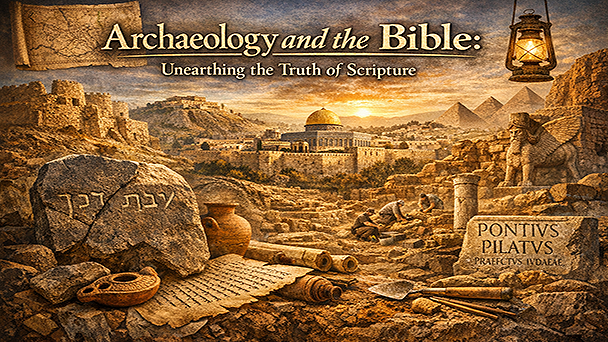
Archaeology also confirms figures from the New Testament period. An inscription found in Caesarea names Pontius Pilate, the Roman governor who sentenced Jesus to crucifixion. This discovery places the Gospel accounts firmly within known Roman history rather than legend.
Entire Nations Named in the Bible Were Real
The Bible mentions nations such as the Assyrians, Babylonians, Persians, Moabites, Philistines, and Egyptians. Archaeological records from these civilizations confirm kings, battles, exiles, and political events described in Scripture. These records were not written to support the Bible, yet they align with it repeatedly.
How Many Biblical Places Have Been Found?
There is no single official number, but scholars acknowledge that hundreds of locations mentioned in the Bible correspond to real archaeological sites. While not every biblical place has been identified, the growing body of evidence shows that the Bible accurately describes the geography, cities, and political realities of the ancient world. Click here for recent archaeology finds
Conclusion: Faith Rooted in Real History
Archaeology does not replace faith, but it does silence the claim that the Bible is detached from reality. Time and again, spades in the ground have uncovered cities, inscriptions, and structures that confirm the Bible speaks about real people and real places. What was once mocked as myth continues to emerge from the dust of history.

 D12
D12 
Comments