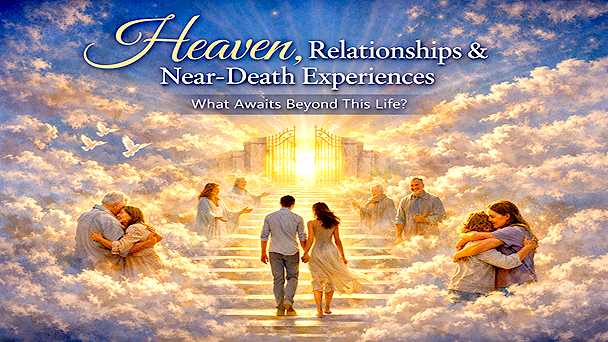
Many people wonder what heaven will truly be like—especially when it comes to relationships. Will we recognize our loved ones? Will marriages continue? Will we remember our lives on earth? While the Bible does not give a complete picture, it offers enough insight to guide our understanding. Interestingly, near-death experiences (NDEs) reported by many individuals seem to echo some of these same ideas, raising even more questions about what awaits beyond this life.
1. Will We Recognize Our Loved Ones?
Scripture strongly suggests that we will retain our identity after death. In multiple biblical accounts, individuals are recognized even after leaving this world. This has led many to believe that we will know our family members, friends, and others in heaven. The idea of being “gathered” to loved ones appears throughout the Bible, offering comfort that relationships are not simply erased.
Near-death experiences often reflect this same idea. Many people who have come close to death report being greeted by deceased relatives or familiar figures. These encounters are often described as peaceful, loving, and deeply personal—suggesting recognition, not confusion or anonymity.
2. What About Marriage in Heaven?
One of the clearest teachings from the bible, is that earthly marriage does not continue in heaven in the same way it exists now. In Matthew 22:30, He explains that people will neither marry nor be given in marriage after the resurrection.
This does not mean relationships are lost. Instead, many believe it means that human relationships will be transformed into something greater—free from jealousy, pain, or limitation. Love is not removed; it is perfected.
3. What the Bible Says About Heaven Itself
The Bible describes heaven as a place without suffering, pain, or death. it is written that God will wipe away every tear. This paints a picture of complete peace and restoration, where everything broken in this life is made whole.
Rather than focusing on earthly roles and titles, heaven centers on being in the presence of God. Many believe that this alone brings a level of fulfillment that surpasses anything experienced in this life.
4. Near-Death Experiences: A Glimpse Beyond?
Near-death experiences have become a major topic of discussion, especially as more people come forward with detailed accounts. Some individuals report seeing events happening around them while they were clinically unconscious, including specific details they seemingly could not have known otherwise. This page here, will bring you to some videos about the After Life.
Researchers have studied these experiences, noting that some cases are difficult to explain purely through brain activity, oxygen loss, or chemical reactions.
Many NDE accounts share common themes: • A feeling of peace and love • A sense of leaving the body • Encounters with light or spiritual beings • Being greeted by deceased loved ones • A reluctance to return to earthly life
While these experiences are compelling, they are not universally accepted as proof of the afterlife. Scientists continue to study them, searching for explanations while acknowledging that some cases remain unexplained.
5. Faith, Evidence, and Hope
For believers, the foundation of understanding heaven comes from Scripture and faith rather than personal experience alone. Near-death experiences may support or echo these beliefs, but they are not the primary source of truth.
Still, it is hard to ignore that many NDE accounts align with biblical hope—especially the idea of peace, love, and reunion. Whether viewed as glimpses of the afterlife or as mysteries of the human mind, they continue to point toward something beyond this world.
Conclusion
The Bible does not answer every question about heaven, but it gives a clear message: death is not the end, and what lies beyond is far greater than what we experience now. Relationships may not look the same as they do on earth, but love itself is not lost—it is made complete.
Near-death experiences add another layer to the conversation, offering accounts that often reflect recognition, peace, and connection. While not definitive proof, they provide a powerful reminder of the hope many hold onto—that we may one day see and know our loved ones again in a way that is deeper than ever before.

 D36
D36 
Comments