The Revelation’s Key to a Revived Empire and Its Leader
D23
Most believe the Anti-Christ is coming from the revived roman empire, but is it possible we got that wrong? I think we have. Watch the main video on this page Here, it will explain more about this subject and about the subject in this article below.
The Revelation’s Key to a Revived Empire and Its Leader
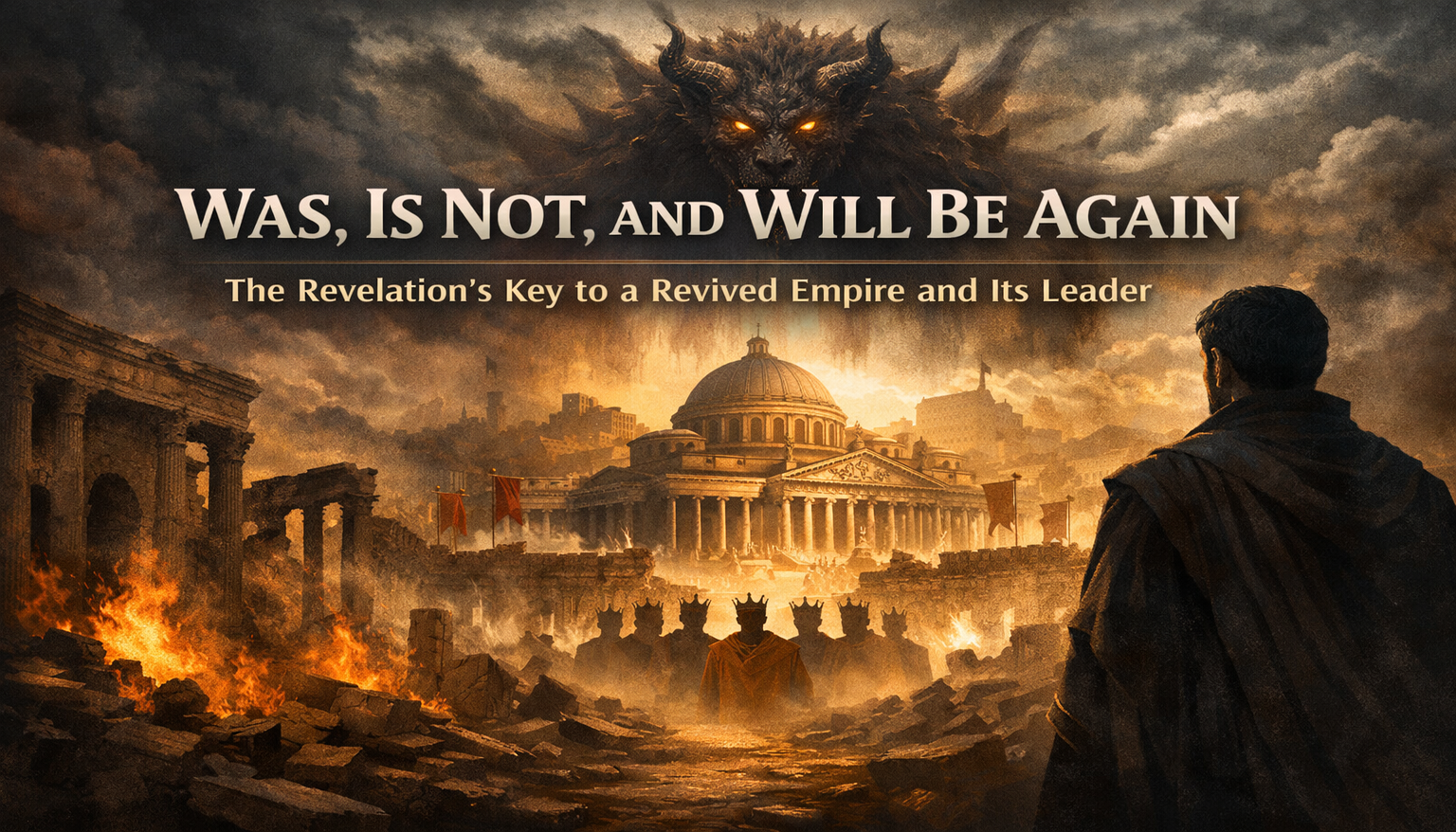
the line found in Revelation 17:8: “The beast that you saw was, and is not, and will ascend.” Is this speaking of a resurrected man? Or is it describing the rebirth of a global empire? While many interpretations exist, a growing number of scholars argue that the focus is not merely on a person, but on the revival of a powerful political system—one that once ruled the world, disappeared, and will rise again with a leader at its head.
The Historical Context: Why Many Point to Rome
Revelation was written during the height of Roman power. When John describes seven heads as seven mountains, first-century readers would have immediately thought of Rome, famously built on seven hills. Rome was the dominant empire of the time—the political, military, and economic center of the world.
For this reason, many interpreters conclude that the beast represents Rome itself. It “was” in John’s day. It later collapsed. Yet the prophecy suggests something more than ancient history. It points forward to something that will “ascend” again.
Was, and Is Not: The Collapse of an Empire
The Western Roman Empire officially fell in A.D. 476. Though its influence lingered through law, culture, and religion, its unified political dominance ended. In prophetic terms, it “was, and is not.”
Yet Revelation does not end the story there. It says the beast “will ascend out of the abyss.” This language suggests revival—not merely continuation. Something once thought dead returns to the global stage.
The Coming Revival: Empire Reborn
Many prophecy scholars connect this passage with Daniel 7, where four successive empires are symbolized by beasts. Rome is commonly identified as the fourth. Daniel also describes ten horns arising from that final kingdom—a detail echoed in Revelation 17, where ten kings give their power to the beast.
Under this interpretation, the final world power is not something entirely new. It is a revival of the Roman model—centralized authority, global economic influence, and unified political control. It may not look exactly like ancient Rome, but it will reflect its structure and spirit.
The Leader of the Revived Empire
While the beast represents a kingdom, Revelation also presents it as a figure who rules. This is where the Antichrist concept enters the discussion. The system and the man are intertwined. The empire rises, and a singular leader becomes its face.
Rather than focusing solely on a resurrected individual, this view emphasizes that the true power lies in the revived imperial structure. The leader emerges from within that system—shaped by it, empowered by it, and ultimately controlling it.
The Fatal Wound: Man or Kingdom?
Revelation 13 describes a “fatal wound” that was healed, causing the world to marvel. Some believe this refers to an assassination attempt on the Antichrist. Others argue it symbolizes the fall and later restoration of the empire itself.
If the beast is a revived Roman system, then the wound could represent the empire’s historic collapse and astonishing reappearance in a modern form. The amazement of the world would not be over a man returning from death, but over a global power structure reemerging after centuries of absence.
Why This Interpretation Matters Today
Viewing the prophecy as the rebirth of an empire shifts the focus from sensational speculation about a single person to broader geopolitical developments. It invites readers to watch global alliances, economic consolidations, and supranational governing structures.
The prophecy suggests that history is cyclical in its power struggles. Empires rise, dominate, collapse, and reconfigure. But Revelation makes one thing clear: even the final revived empire “goes to destruction.” Its rise is temporary.
The Bigger Picture
“Was, and is not, and will be again” may be the prophetic blueprint of a system that once ruled the known world and will rise again in the last days with a powerful leader at its head.
Whether one sees it unfolding now or in the distant future, the central message remains unchanged: human empires, no matter how dominant, are temporary. The final word in Revelation does not belong to the beast—but to the sovereign rule of God.

 D23
D23 
Comments