Why Would God Create People Knowing Some Will Reject Him?
D20
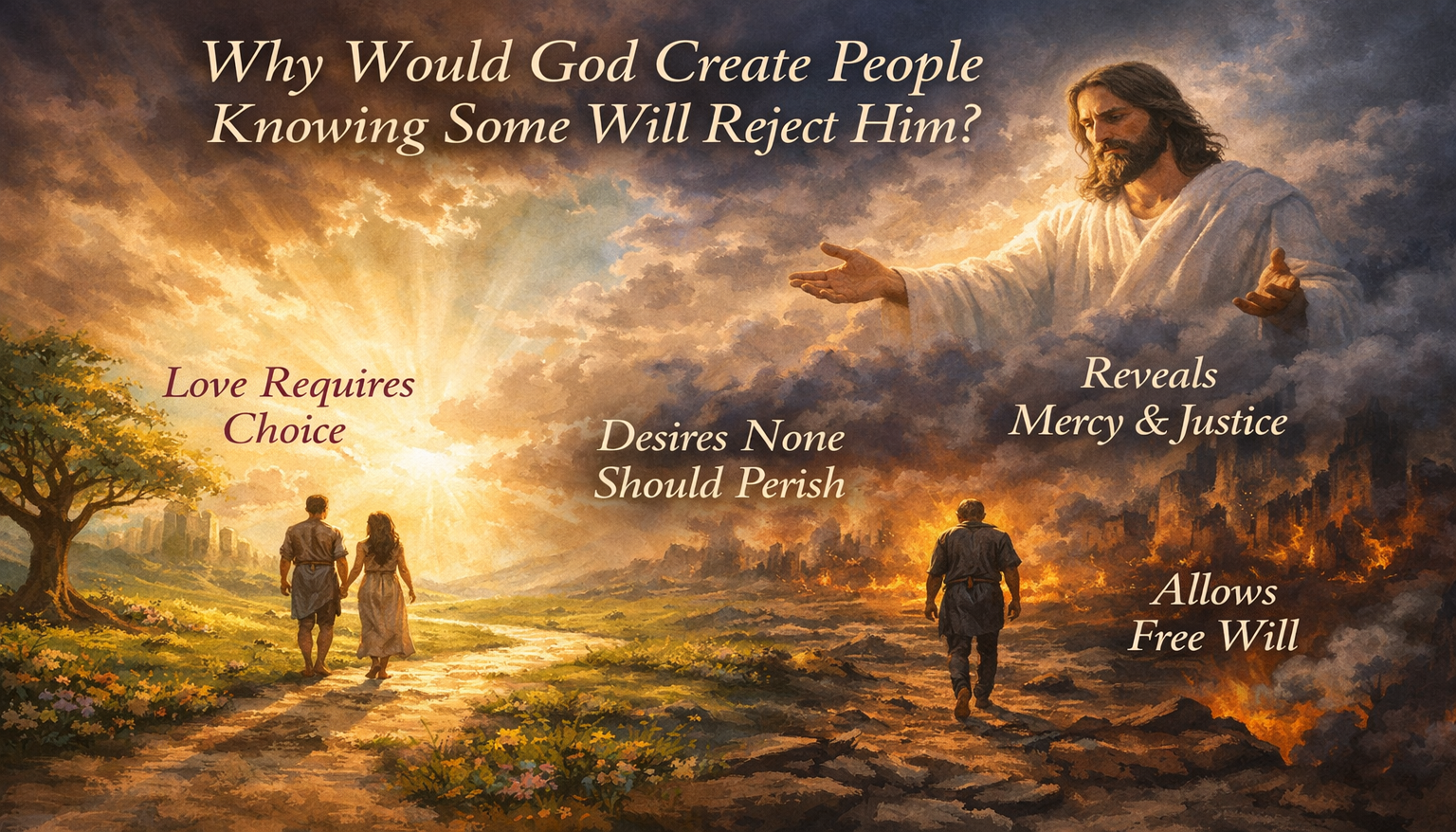
One of the most difficult and honest questions a person can ask is this: If God is all-knowing, and He knows some people will reject Him, why create them at all? This question touches on the nature of love, free will, justice, and the character of God. Christians have wrestled with it for centuries. While no explanation removes every mystery, Scripture gives us meaningful insight.
1. Love Requires Real Choice
One of the most common biblical explanations is simple but profound: love cannot be forced. From the beginning in Genesis, humanity was given genuine choice. When God placed Adam and Eve in the garden, He gave them the freedom to obey or disobey. That freedom made authentic love possible.
In Deuteronomy 30:19, God says, “I have set before you life and death… now choose life.” That language assumes real decision-making. If humans were programmed only to obey, love would not be genuine—it would be robotic compliance. The very capacity that allows someone to love God also allows them to reject Him.
2. God’s Desire Is That None Should Perish
Scripture repeatedly affirms that God does not delight in judgment. His heart is toward repentance and restoration.
In Ezekiel 18:23, the Lord says, “Do I take any pleasure in the death of the wicked? Rather, am I not pleased when they turn from their ways and live?” Likewise, 2 Peter 3:9 declares that the Lord is “not willing that any should perish, but that all should come to repentance.”
From this perspective, God creates people for relationship. He genuinely desires their salvation. Rejection is not His desire but a human decision.
3. God’s Glory Includes Both Mercy and Justice
Another theological perspective emphasizes God’s sovereignty and the full display of His character. God’s glory is revealed not only through mercy but also through justice.
In Romans 9:22–23, the apostle Paul speaks of God demonstrating both wrath and mercy to make His glory known. In this view, creation ultimately serves to reveal who God is in His holiness, grace, righteousness, and justice.
4. Foreknowledge Does Not Equal Causation
Some theologians make an important distinction: knowing something will happen is not the same as causing it to happen. God’s foreknowledge does not mean He forces rejection.
For example, knowing the sun will rise tomorrow does not cause it to rise. In the same way, God can know who will reject Him without compelling them to do so. His knowledge does not eliminate human responsibility.
5. The Difficult but Honest Reality
The deeper issue behind this question is often emotional as much as theological. Why create someone who ends up lost? Why allow eternal separation at all?
The Bible’s answer is relational rather than merely philosophical. God values authentic relationship so deeply that He permits the possibility of refusal. He creates, calls, warns, pursues, and ultimately sacrifices through Christ to make salvation available. Yet He does not override the human will.
Conclusion
Why would God create people knowing some will reject Him? According to Scripture, because real love requires freedom, because His desire is for repentance and life, and because His full character—both mercy and justice—is revealed in human history. While the mystery is not completely removed, the Bible presents a God who desires relationship, not robots, and who offers salvation freely, even knowing some will refuse it.

 D20
D20 
Comments