Digital ID in America & the Mark of the Beast: Could a “No Buy, No Sell” System Take Root Here?
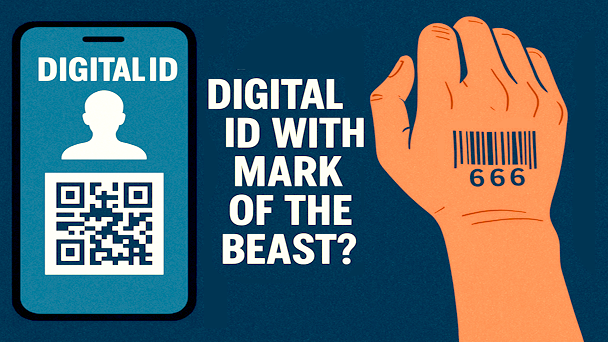
Across the world, governments and corporations are building digital identity (digital ID) systems—credentials you present through your phone or online accounts to prove who you are in order to work, bank, travel, access healthcare, or receive benefits. Many Americans sense that this technology, while often marketed as “convenience” and “security,” could also become the foundation of a coercive system—one that echoes Revelation 13:16–17, He causes all, both small and great, rich and poor, free and slave, to receive a mark on their right hand or on their foreheads, and that no one may buy or sell except one who has the mark or the name of the beast, or the number of his name. this is where participation in buying and selling hinges on accepting a mark of allegiance. This article explains how digital ID could expand in the United States, why it matters, and how it intersects with end-times prophecy and personal preparedness. More on the Mark Of The Beast here
What Is a Digital ID (US Context)?
A digital ID is a government- or industry-issued credential stored in a digital wallet or online profile. In the US, you might see it in forms like mobile driver’s licenses (mDLs), single-sign-on accounts for government portals, or identity verification through third-party vendors for taxes, benefits, or healthcare portals. Big tech platforms also build their own identity layers (log in with your phone, email, or app), which can tie identity to payments, services, and even location data.
On its face, digital ID can streamline paperwork, reduce fraud, and speed up services. The risk emerges when the credential becomes a gatekeeper: “No valid digital ID? Then no job application, no flight, no account, no prescription, no benefits.” That’s where convenience morphs into control.
Where Digital ID Could Become a Lever of Control
Work & Income: If employers must verify identity through a specific app or vendor, access to employment could effectively depend on a centrally approved credential. No credential—or a suspended one—could mean no job offer, no onboarding, no paycheck direct deposit.
Banking & Payments: ID-linked accounts already power KYC (Know Your Customer) checks. If a digital ID becomes the universal key, account creation, transfers, or even point-of-sale approvals could hinge on “good standing.” Tie that to programmable money or payment networks and restrictions can be applied in real time.
Travel & Mobility: Identity checks at airports, border crossings, and even certain public events are expanding. A single digital credential used across multiple checkpoints consolidates power in whoever issues or revokes that credential.
Healthcare & Benefits: Digital ID can gate access to patient portals, prescriptions, and public assistance. If eligibility rules become tied to behavior scores or policy compliance, life essentials can be throttled by policy switches instead of personal doctors or local offices.
Platforms & Speech: If social media or payment processors require “verified” IDs, dissent can be silenced by de-verification. In a digital economy, losing access to platforms can also mean losing access to customers, donors, or community.
Scripture’s Warning: Buying and Selling Under a Mark
Revelation 13:16–17 describes a moment when “all, both small and great, rich and poor, free and slave” receive a mark “so that no one can buy or sell unless he has the mark.” The passage ties economic participation to allegiance: it’s not only transactional; it’s moral and spiritual. Many Christians understand this as a future global system under the Antichrist, where economic life becomes a test of loyalty to a God-opposing regime.
Digital ID by itself isn’t the mark. Technology is a tool. The danger appears when identity, payments, and permissions fuse into a single, compulsory gateway—and when access is conditioned on compliance with policies that contradict God’s commands. The closer a system gets to “No ID, no buy/sell,” the more it resembles the biblical warning.
How a US “No Buy / No Sell” Architecture Could Emerge
1) Standardize Identity: Normalize one or a handful of digital IDs for government and private-sector access (taxes, benefits, banking, employment, travel). People adopt it because it’s easy and required by major services.
2) Tie Payments to Identity: Expand identity checks from account opening to everyday transactions. Card networks, payment apps, and merchants increasingly require verified identity to reduce fraud and satisfy regulations.
3) Add Programmability: If digital payments or a future central bank digital currency (CBDC) gain traction, rules can be applied in software: where/when funds work, which merchants are allowed, purchase categories, carbon quotas, or behavioral penalties and rewards.
4) Enforce via Policy: Once essential services require the ID, compliance becomes non-negotiable: “Update your credential. Accept the new terms. Complete the policy training. Or lose access.” That is the pressure point Revelation describes—economic life conditioned on allegiance.
Red Lines & Safeguards Americans Should Watch
Voluntary vs. Mandatory: Convenience is one thing; compulsion is another. Any move from “optional” to “required for core services” (work, banking, food, medicine) is a bright red flag.
Multiple Paths vs. One Gate: Free societies preserve analog/offline alternatives: paper IDs, cash, in-person services. A single digital gate creates a single point of failure—and control.
Data Minimization & Separation: Identity data, health data, financial data, and location data should not be fused into one dossier. Separation of powers and strict limits are essential to prevent a surveillance profile that can be used to punish disfavored beliefs or speech.
Due Process & Appeal: If access can be throttled, citizens must have clear, rapid ways to contest errors or political misuse. Silent “shadow bans” of identity are incompatible with liberty.
Cash & Local Resilience: Maintaining cash, community barter, and local supply chains resists the total digitization of survival.
Spiritual Discernment in a High-Tech Age
Scripture warns of systems that weaponize economics against faith. The mark is ultimately about worship and allegiance. Whether the final system uses tattoos, chips, QR codes, or IDs doesn’t change the heart of the test: Whom will you serve when obedience to God conflicts with the demands of the system?
Christians should cultivate courage, community, and conviction now—before the pressure tightens. The earlier we identify compromises, the easier it is to resist them. Small concessions prepare the way for larger ones; small stands prepare the way for bigger ones.
Practical Prep: How to Live Free if Digital ID Expands
1) Diversify Access: Keep physical identification documents current; preserve cash on hand; learn to operate without a single app as the “key” to life. Support local businesses that accept multiple forms of payment and identity.
2) Harden Your Accounts: Use strong authentication you control (hardware keys, strong passcodes). Limit oversharing of personal data. Don’t connect every service through a single big-tech login if you can avoid it.
3) Build Community: Church networks, local co-ops, and mutual-aid groups are lifelines if centralized systems become punitive. Practice helping one another with food, transportation, childcare, and trades.
4) Know Your Lines: Decide now what you cannot in good conscience accept—then communicate those convictions to your family. Teach children why integrity matters more than convenience or popularity.
5) Engage Lawfully: Support local and state protections for cash, medical and religious conscience rights, data minimization, due process, and anti-discrimination for viewpoint and faith. Liberty must be defended in policy, not only in prayer.
Conclusion: Stay Watchful, Stay Faithful
America is rapidly digitizing identity and payments. The same rails that deliver convenience can deliver control. Revelation warns us that a day will come when buying and selling is conditioned on allegiance to a global system opposed to God. We don’t have to panic—but we must not be naïve. Strengthen your faith, your family, your church, and your local economy. Preserve alternatives, defend liberty, and resolve in your heart to follow Christ—whatever the cost.

 C30
C30 
Comments