Rethinking the Seven-Year Tribulation: A Closer Look at Daniel 9
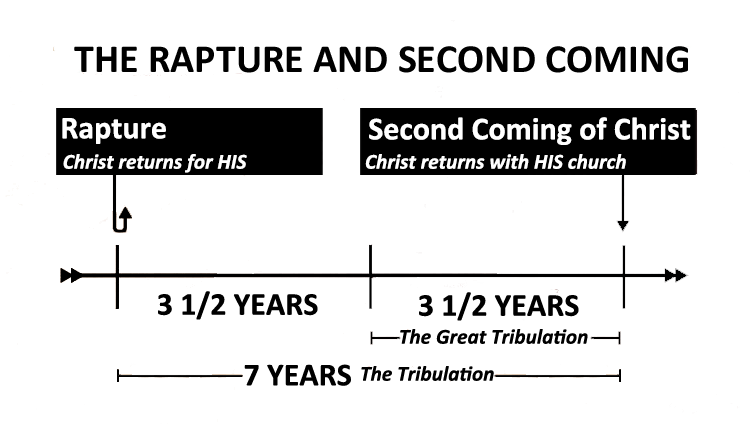
Many Christians debate whether the idea of a seven-year Tribulation in the end times is biblically accurate. The futurist interpretation — which applies Daniel chapter 9 to a future Antichrist and a seven-year period of judgment — is not the most widely held understanding among believers today. In fact, some argue this view comes from a misreading of Daniel’s prophecy, which focuses on the Messiah rather than the Antichrist.
Setting the Scene: Daniel in Babylon
When Daniel received this prophecy, the Jewish people were still in Babylonian captivity. A devout servant of God, Daniel was praying earnestly when, in Daniel 9:24–27, the angel Gabriel revealed a detailed timeline of events. This prophecy speaks of “seventy weeks” determined for God’s people and Jerusalem, promising an end to sin, reconciliation for iniquity, everlasting righteousness, and the anointing of the Most Holy.
The Prophetic Day-for-a-Year Principle
The seventy “weeks” in Gabriel’s message are not literal weeks of days. In biblical prophecy, a day often represents a year — a principle confirmed in Ezekiel 4:6: “I have appointed thee each day for a year.” Multiplying 70 weeks by 7 days per week gives 490 days, which equals 490 literal years in prophetic reckoning. This period was the amount of time God allotted to ancient Israel for the fulfillment of the prophecy.
When the Countdown Began
Gabriel stated that the prophetic clock would start “from the going forth of the commandment to restore and to build Jerusalem.” Historically, this decree was issued in 457 BC by the Persian king, granting the Jews permission to rebuild. From that year, Gabriel’s timeline mentions seven weeks plus sixty-two weeks — 69 weeks in total. Converted to years (69 × 7 = 483 years), and adjusting for the absence of a year zero between BC and AD, this points to 27 AD.
27 AD: The Arrival of the Messiah
Luke 3 records that in the fifteenth year of Tiberius Caesar’s reign, John the Baptist began his ministry — the same year Jesus was baptized and began His own. While some date the fifteenth year from Tiberius’ sole rule starting in 14 AD (landing in 29 AD), historical evidence suggests his co-reign began in 12 AD. Counting from there, the fifteenth year aligns with 27 AD, perfectly matching Daniel’s prophecy of the Messiah’s arrival.
The Final Week: Fulfilled by Christ
The last “week” of seven years is often misapplied to a future Antichrist. However, the prophecy plainly says “Messiah” — not the Antichrist — will confirm the covenant, be “cut off” in the middle of the week, and cause sacrifices to cease. Jesus’ ministry lasted 3½ years, ending with His crucifixion around 31 AD. His death ended the old sacrificial system, establishing the new covenant through His blood. The remaining 3½ years were fulfilled as the apostles preached the gospel primarily to the Jews until 34 AD, when the message began spreading to the Gentiles.
The Message for Today
Rather than pointing to a future seven-year Tribulation ruled by the Antichrist, Daniel 9 highlights the exact timing and purpose of Jesus’ first coming — His sacrifice for all humanity and the establishment of the new covenant. This prophecy showcases God’s precise planning and the depth of His mercy. Christ’s love is powerful enough to save the worst of sinners. The question remains: will you accept His gift?

 A4
A4 
Comments