On July 1, 2025, astronomers using the ATLAS survey telescope in Chile discovered 3I/ATLAS, the third known interstellar object to pass through our solar system. Following the famous ʻOumuamua in 2017 and comet 2I/Borisov in 2019, this new arrival offers a rare chance to study material that originated far beyond our Sun.
Path Through the Solar System
3I/ATLAS is on a hyperbolic trajectory, meaning it is not bound to the Sun and will continue its journey back into interstellar space. It will reach its closest approach to the Sun on October 29, 2025, at a distance of about 1.36 AU—roughly between Earth and Mars. The comet will not come closer than 1.8 AU to Earth, ensuring no danger to our planet. Before that, it will pass near Mars in early October 2025 and then make a distant approach to Jupiter in March 2026, giving astronomers excellent opportunities to track its behavior.
Signs of an Active Comet
Unlike ʻOumuamua, which showed no clear coma or tail, 3I/ATLAS is behaving like a typical comet. By late August, telescopes captured a growing tail and a glowing coma as solar radiation began to heat its ices. This activity confirms that the object carries dust and frozen gases similar to comets formed within our own solar system.
Strange Composition
Observations with the James Webb Space Telescope in August 2025 revealed that the comet’s coma is unusually rich in carbon dioxide, with a CO₂-to-water ratio about six times higher than what astronomers typically see in solar system comets. Water, carbon monoxide, OCS, ice, and dust were also detected, pointing to a complex and volatile-rich object. Other space telescopes like SPHEREx and Swift confirmed both water activity and significant dust release, with estimates suggesting the comet is venting around 40 kilograms of water per second even while far from the Sun.
Age and Origins
By tracing its galactic path, scientists believe 3I/ATLAS likely comes from the thick disk of the Milky Way. If true, it could be anywhere from 7 to 14 billion years old—making it far older than our solar system. This would make 3I/ATLAS one of the oldest comet-like bodies ever observed, carrying chemical fingerprints of a very ancient time in our galaxy.
Rotation and Dust Behavior
Ground-based measurements show that the comet rotates roughly every 16 hours. As it spins, dust jets are released, causing its coma to redden and thicken. These changes closely resemble the behavior of outer solar system comets as they warm up while approaching the Sun.
Speculation and Debate
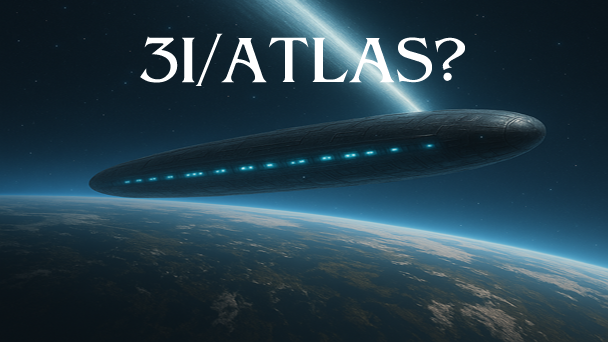
While most astronomers view 3I/ATLAS as a natural comet, some more speculative theories have emerged. A recent paper suggested it could even represent alien technology, echoing earlier debates about ʻOumuamua. These ideas remain highly controversial and are widely dismissed by the scientific community, which emphasizes that all evidence so far points to a cometary body of natural origin.
Why 3I/ATLAS Matters
3I/ATLAS is much more than a fleeting visitor. Its unusual chemical makeup, its great age, and its clear activity make it a scientific treasure. Each interstellar object provides clues about how planets and comets form around other stars. As it passes near Mars and the Sun this year, astronomers worldwide will be watching closely, hoping to uncover secrets locked in this ancient traveler from the stars.
Quick Facts: 3I/ATLAS
Discovery: July 1, 2025 (ATLAS survey, Chile)
Classification: Active interstellar comet (third known after 1I/ʻOumuamua and 2I/Borisov)
Orbit: Hyperbolic, unbound; inbound from the direction of Sagittarius
Closest to the Sun (perihelion): October 29, 2025 (~1.36 AU)

 NWS 4
NWS 4 
Comments